
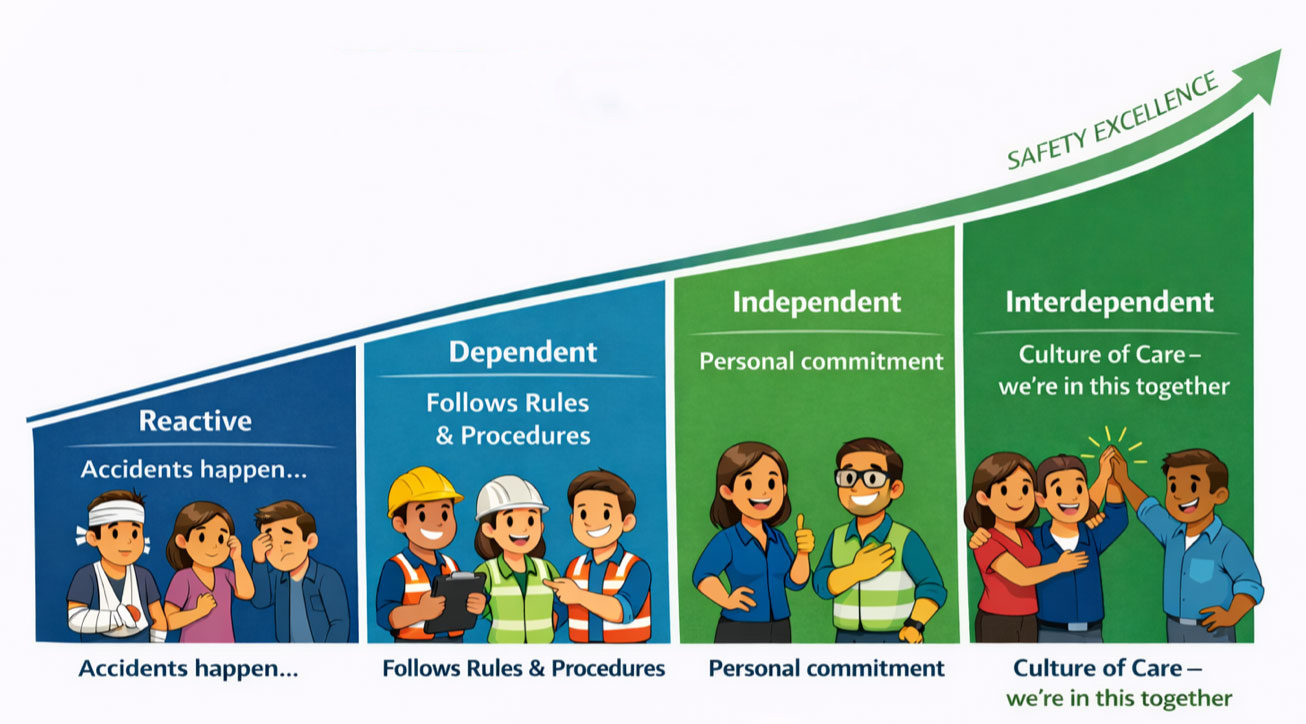


Courage, Care and Curiosity: Rethinking What Creates Safer Cultures
after many years working in operational leadership, safety and team development, the current question is: What is it that truly creates cultures where people feel able to speak up, challenge, learn and look out for one another?

When the pressure is on, this is not the time to step back from your people
Pressure doesn’t create leadership capability. It reveals it.
And if the capability isn’t there when it matters most, no amount of cost-cutting will compensate for it.
Emotional Intelligence: More Than Just Being a “People Person”
What is Emotional Intelligence (EQ)?
Many assume that if someone is outgoing, friendly, or naturally good with people, they must have high emotional intelligence. But being a “people person” doesn’t automatically mean you have high EQ.
STEM–What it is and Why I’m still passionate about it
STEM is a familiar acronym: Science, Technology, Engineering and Mathematics. For me, however, STEM is far more than a set of disciplines. It represents opportunity, innovation, resilience, and—still unfinished business.

International Women’s Day 2026
If organisations truly want high performance, they can’t afford to ignore half the talent pool.
Relationship Intelligence—What on Earth is it (and why should you care)?
At its heart, safety is about people. Policies, audits and risk assessments all play a role, but they cannot replace the impact of authentic leaders who genuinely care about the wellbeing of those they lead.