What is Emotional Intelligence (EQ)? Many assume that if someone is outgoing, friendly, or naturally good with people, they must have high emotional intelligence. But being a “people person” doesn’t automatically mean you have high EQ.
In reality, emotional intelligence runs much deeper.
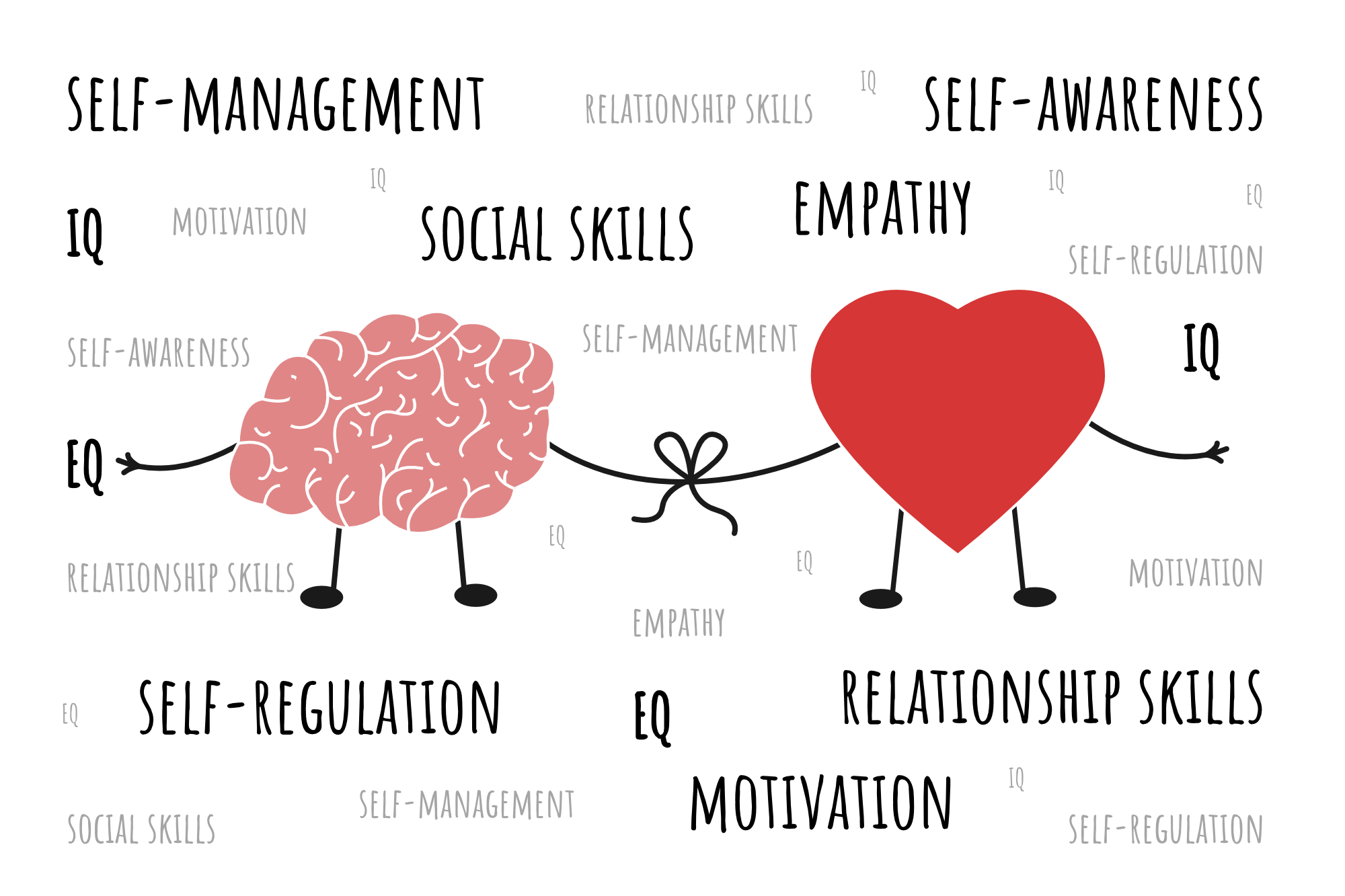
At its core, EQ is about awareness, of ourselves and of others, and how we use that awareness to navigate relationships, decisions, and everyday interactions.
What Emotional Intelligence Really Means
Emotional Intelligence is not about being the most talkative person in the room or the most socially confident. It’s about how we understand, interpret and respond to emotions, both our own and those of others.
It shows up in:
- How aware we are of how people around us are feeling
- How well we understand our own emotional triggers and behaviours
- How we choose to respond in moments that matter
It’s less about personality and more about intentional behaviour.
What are the Core Elements of Emotional Intelligence?
Self-awareness
This is the foundation of EQ. It’s about knowing your strengths, recognising your weaknesses and understanding how others experience you, not just how you see yourself.
Self-management
This is your ability to influence yourself. To pause, choose your response and act intentionally rather than reactively, especially in challenging situations.
Awareness of others
This is your ability to observe and genuinely understand what others may be experiencing. It’s about empathy, curiosity and resisting assumptions.
Relationship Management
This is where it all comes together. It’s about building, maintaining, and strengthening relationships over time—communicating appropriately, at the right time, in the right way.
Individualisation: A True Strength
One of the most powerful, and often overlooked, aspects of emotional intelligence is individualisation.
High EQ means recognising that:
- Not everyone thinks the same
- Not everyone needs the same approach
- Not everyone responds in the same way
It’s about taking the time to understand people as individuals.
It’s about creating space, for yourself and for others, to learn, adapt and respond in a way that works for them, not just what feels natural to you.
Trust, Empathy, and Psychological Safety
Emotionally intelligent people create environments where others feel heard, respected and safe to speak openly.
True psychological safety isn’t just a buzzword—it’s a reflection of consistent behaviour. It’s built through trust, empathy, and openness.
It’s shown in:
- Knowing when to listen
- Knowing when to offer an observation
- Being open, without judgement
- Responding, not reacting
This is what builds authentic, effective relationships, not surface-level connection, but meaningful, lasting ones.
Emotional Maturity and Growth
Emotional intelligence is closely linked to emotional maturity which is our ability to process experiences, learn from them and grow, recognising that it’s not about getting it right all the time. It’s about reflecting on our behaviour and understanding our emotional responses; learning from what didn’t go well leading to us choosing differently next time.
We invite you to take a moment to reflect
Thinking about your own experiences.
- When have you worked with someone who demonstrated high emotional intelligence?
- How did they make you feel?
- How did you respond?
Now consider the opposite:
- When have you worked with someone with low emotional intelligence?
- How did that feel?
- What impact did it have on your motivation, confidence and performance?
We can clearly recall working with many people who operate within a very wide span of EQ from an obvious high to a shocking low! And it’s not about a numerical measure of EQ—you tend to be able to identify where someone is on the scale, then again, maybe you need a reasonably high level of EQ to be able to see that… …hmmm, thoughts??
Many of us have experienced both and it really does make a difference:
Working with someone with high EQ often feels:
- Productive
- Energising
- Enjoyable
- Empowering
It can feel like you can take on the world together.
On the other hand, working with someone with low EQ can feel:
- Frustrating
- Stressful
- Draining
- Restrictive
It can suppress ideas, confidence, and growth, to the point where simply leaving feels like the only option.
So here’s our final thought on Emotional Intelligence—it isn’t necessarily a fixed trait—it IS a skill that can be developed.
- It starts with awareness.
- It grows through reflection.
- And it shows up in how we choose to treat others, every single day.
The question is not whether you’re a “people person.” The question is:
How intentionally do you understand and respond to the people around you?
At
Acredale Consulting, we can help you explore your self-awareness, reflection skills and development of your EQ through coaching, support and building on your existing relationship capabilities.
Get in touch to find out more.